Category: Legal
Categories
-

Whitepaper: Migrating from OneTrust to improve performance and reduce costs
Our new whitepaper walks through a structured migration from OneTrust to consentmanager: close visibility gaps, switch without rebuilding your tags, and cut consent management costs.
-
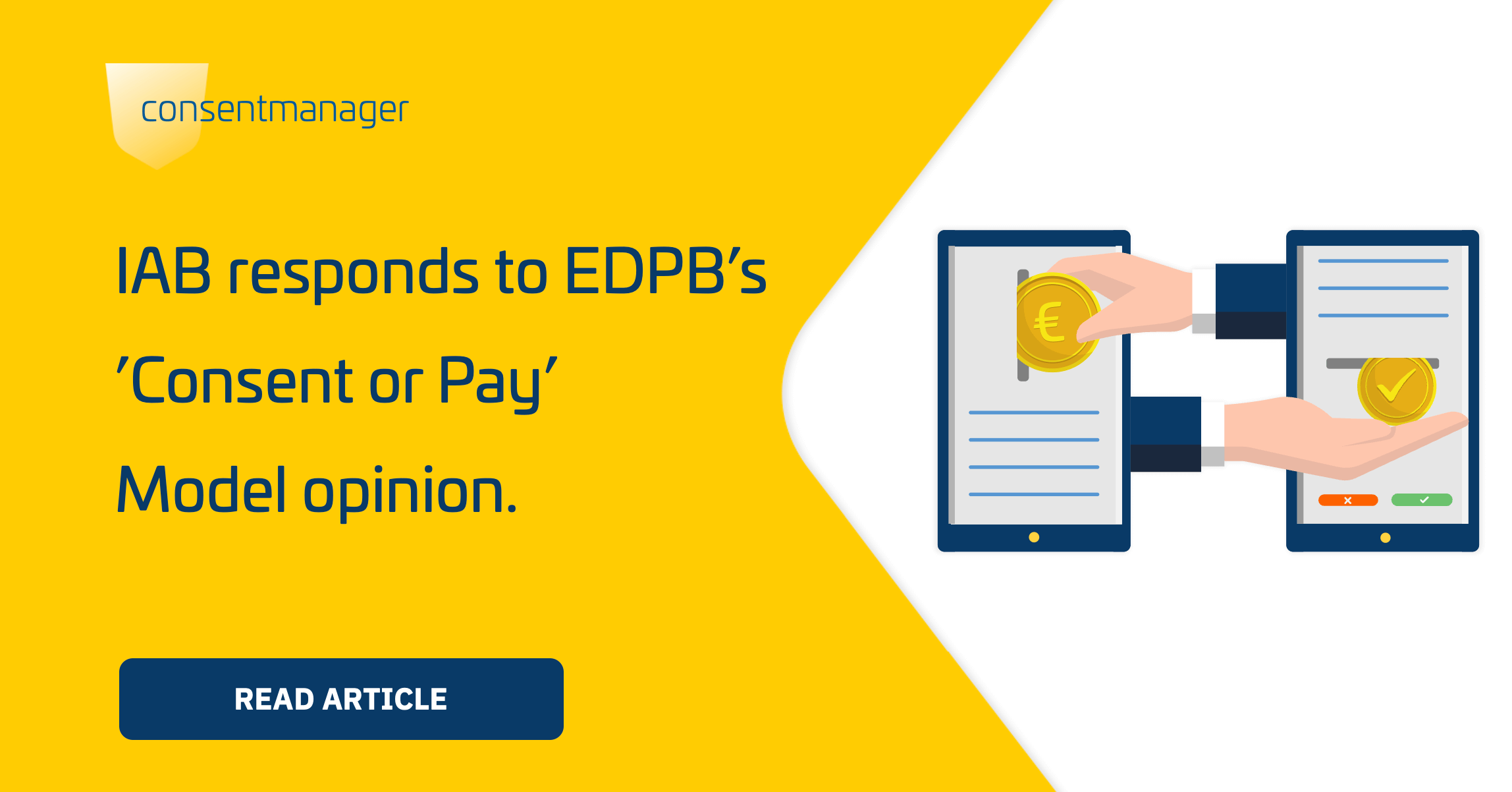
IAB Europe responds to EDPB statement on consent or pay models
On April 17, 2024, the European Data Protection Board ( EDPB ) published an opinion on the consent or pay model introduced by major online platforms such as Meta. For a detailed summary on this topic, see our last blog post here. Under this model, consumers have the choice to consent to the processing of…
-

GDPR Data Protection Officer: Does your company need one?
The legal articles of the GDPR describe in detail, in three different sections, the appointment of a data protection officer (DPO), his/her position and his/her tasks. This raises the question: under what conditions is the appointment of a DPO for your company not only optional, but mandatory under the GDPR? In this article, we will…
-
Google postpones abolition of third-party cookies to 2025
Google’s latest update to eliminate third-party cookies in its Chrome browser has now been extended until 2025. This is the third time that Google has delayed the elimination of third-party cookies. Are you unsure about the issue of eliminating third-party cookies? Then we recommend that you click on the following link to learn more about…
-
The latest decision of the EDPB on “consent or pay” models for online platforms
The regulators of the Netherlands, Norway and Germany (Hamburg) have asked the European Data Protection Board ( EDPB ) for an opinion on whether large online platforms may use ‘consent or pay’ models for behavioural advertising based on valid and voluntary consent from users. The background was Meta’s introduction of a subscription model in October…
-
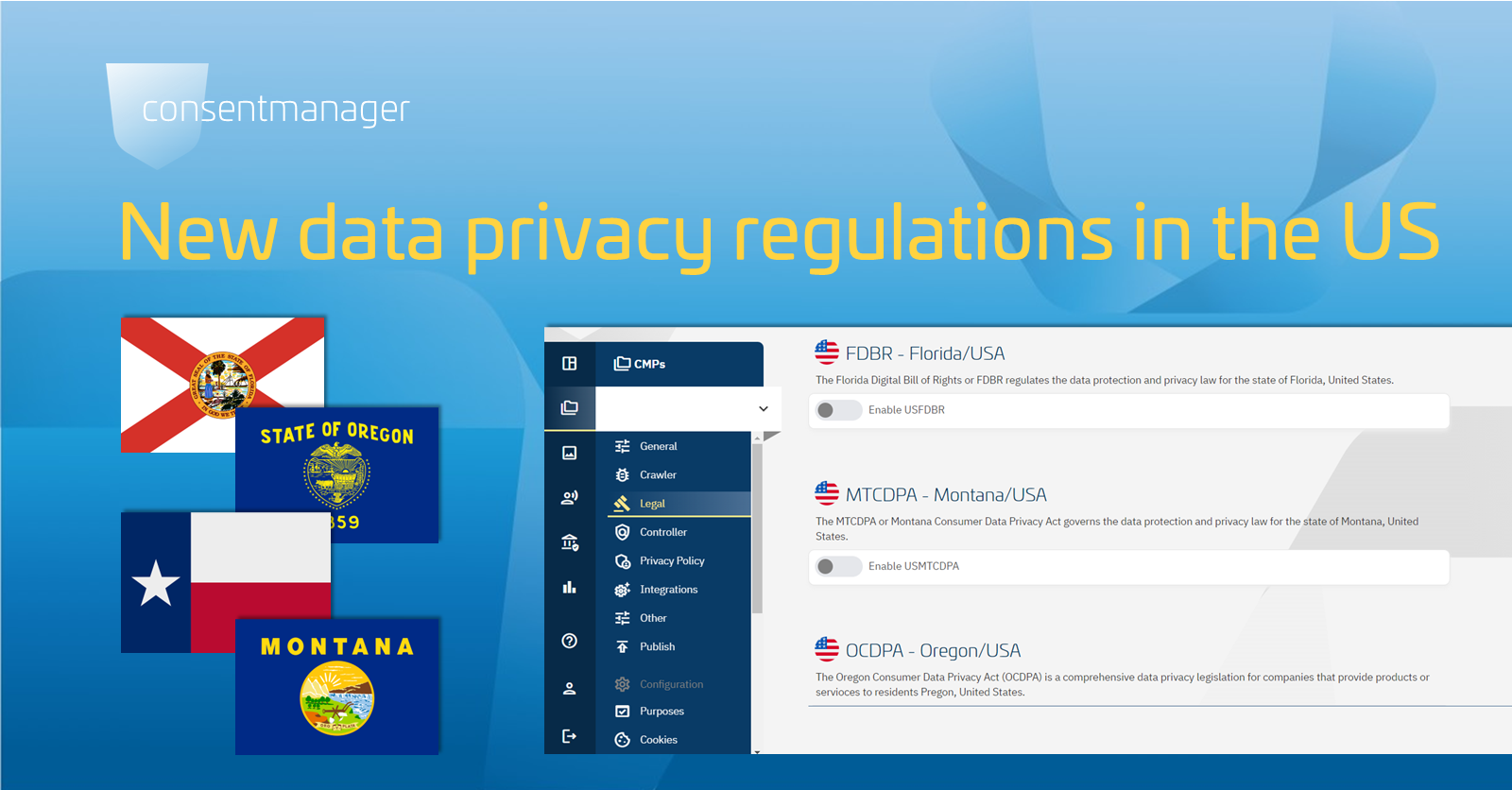
New US data protection laws come into force in 2024: Update your US-specific privacy settings
In the United States, new data privacy laws will take effect in the second half of 2024 – in Florida, Texas, Oregon and Montana . Companies that operate in these states or have customers in these states will need to review their data privacy practices to ensure compliance with the new data privacy laws. To…
-
Does the Digital Services Act (DSA) also apply to your company? Online platforms have additional obligations
The Digital Services Act sets additional transparency requirements for online platforms. The definition of an online platform under the DSA may apply to your business. As a result, you may be required to comply with the additional transparency requirements of the DSA. Read on to find out if your business falls into this category and…
-

Google’s EU User Consent Policy: What companies need to know
The Google EU User Consent Policy sets out the specific requirements that publishers, advertisers, companies and other parties must adhere to when using Google services such as Google Ads. The Policy reflects the requirements of data protection laws in Europe, in particular the GDPR and the ePrivacy Directive, and therefore applies to users targeting end…
-

Google Consent Mode v2 in 2024 for Google Ads users
At the end of 2023, Google introduced the new Consent Mode v2, which builds on its predecessor and includes new features and deadlines. These affect certain Google Ads users and come into force in March 2024. To assess whether these changes are relevant to your advertising activities and understand the impact, take a look at…
-

Farewell to 3rd Party Cookies: Explaining the Shift in Online Tracking
Google, the last of the major browsers like Firefox and Safari to slowly move away from third-party cookies, has already announced that it will be completely free of third-party cookies by the end of 2024. We will explain below what this means and how exactly this should happen! Cookies play an important role in tracking…
-
EU Digital Services Act: Impact on companies
“The whole logic of our rules is to ensure that technology serves people and the societies that we live in – not the other way around. The Digital Services Act will bring about meaningful transparency and accountability of platforms and search engines and give consumers more control over their online lives. The designations made today…