Category: Legal
Categories
-

Whitepaper: Migrating from OneTrust to improve performance and reduce costs
Our new whitepaper walks through a structured migration from OneTrust to consentmanager: close visibility gaps, switch without rebuilding your tags, and cut consent management costs.
-
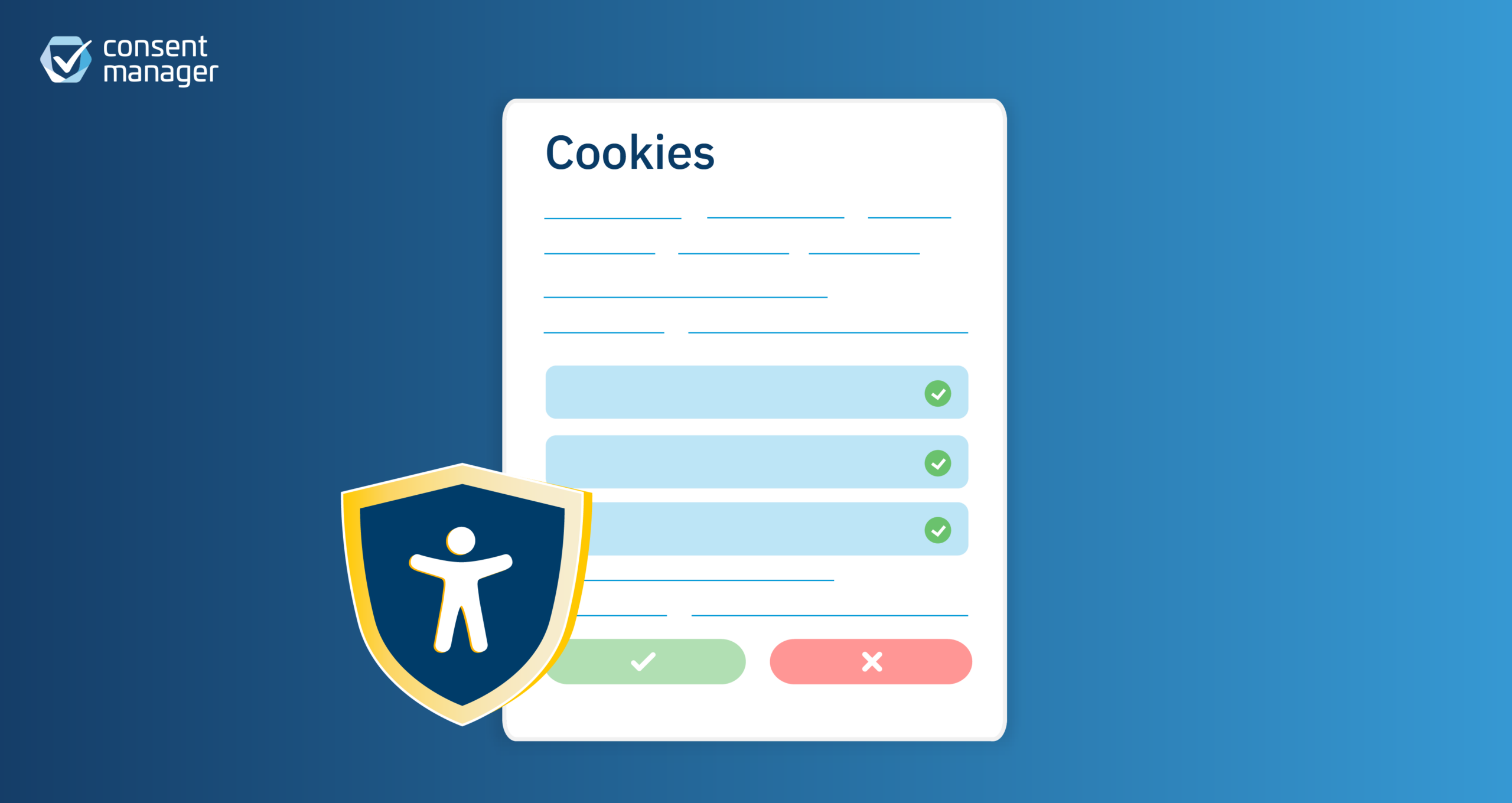
WCAG 2.2 Compliance: Accessible Cookie Banners
The Web Content Accessibility Guidelines (WCAG) are intended to ensure that web content developers have a benchmark to use when creating accessible digital content like websites and cookie banners. The latest version, WCAG 2.2, was published in October 2023. As 16% of the world’s population – around 1 in 6 people – live with a disability, making…
-
Digital Accessibility in Germany: Requirements for Websites and Apps
Digital accessibility has already been introduced in Germany through regulations such as the Accessibility in Information Technology Ordinance 2.0 (BITV 2.0) and the Act on Equal Opportunities of Persons with Disabilities (BGG). Federal agencies, in particular, were obliged to make their websites and apps accessible to all users. The introduction of the Accessibility Reinforcement Act…
-

Polish Electronic Communications Law: Obligations for Companies
The new Polish Electronic Communications Law (ECL) came into force on November 10, 2024. Since then, it has replaced the previous 2004 Telecommunications Law in Poland. The most important difference from the previous Telecommunications Law is its scope of application, which now also affects companies providing online communication services. It aligns the Polish legal framework…
-
European Accessibility Act 2025: Ensure your Cookie Banner is compliant
The European Accessibility Act 2025 (EAA 2025) will soon come into force. Companies in the EU must ensure that their websites or online shops are accessible by the implementation deadline of 28 June 2025. This also applies to the first point of contact, the cookie banner, which must also be accessible for people with disabilities.…
-
Polish DPA on Compliance with the Whistleblower Protection Act
On August 7, the President of the Polish Data Protection Authority (UODO), together with other members of the Authority and external experts, organized a seminar to support companies in the implementation in their business processes. The main points of discussion are summarized here: Expanding the definition of a Whistleblower During the seminar, it was clarified…
-
Microsoft ordered to address cookie storage without users’ consent
Microsoft has been ordered to take action against storing cookies without users’ consent. In a recent ruling dated 23 July 2024, the Higher Regional Court of Frankfurt am Main, Germany, declared that Microsoft should be responsible for providing evidence that end-users have given their explicit consent before cookies are stored on their devices, even if…
-

EU Act on Artificial Intelligence
EU AI Act comes into force in August 2024 Following the European Commission’s initial proposal in April 2021, the European Parliament adopted the EU AI Act, which was published in the Official Journal of the European Union in July 2024 and is available in all member state languages. The Act will officially enter into force in August…
-
American Privacy Rights Act 2024 makes progress
In the United States, data protection law is implemented at state level, with 19 states currently having corresponding laws in force. However, the American Privacy Rights Act (APRA) currently in draft form, introduced by the House Committee on Energy and Commerce on 7 April 2024, could soon establish nationwide privacy and security standards. APRA, which is still…
-
6 years of GDPR: A celebration of its far-reaching impact
We are approaching the sixth anniversary (May 25, 2024) of the General Data Protection Regulation (GDPR), which has influenced data protection standards around the world since it came into force on May 25, 2018. The GDPR has not only fundamentally changed the security and management of personal data, but has also strengthened the rights of…
-
Current developments in data protection in Germany
Data protection in Germany continues to evolve, driven by the population’s growing commitment to protecting their personal data and the efforts of government authorities. In this article, we will review the latest updates and key activities that have taken place in different states in 2023 and the beginning of 2024. Recent court decisions In a…