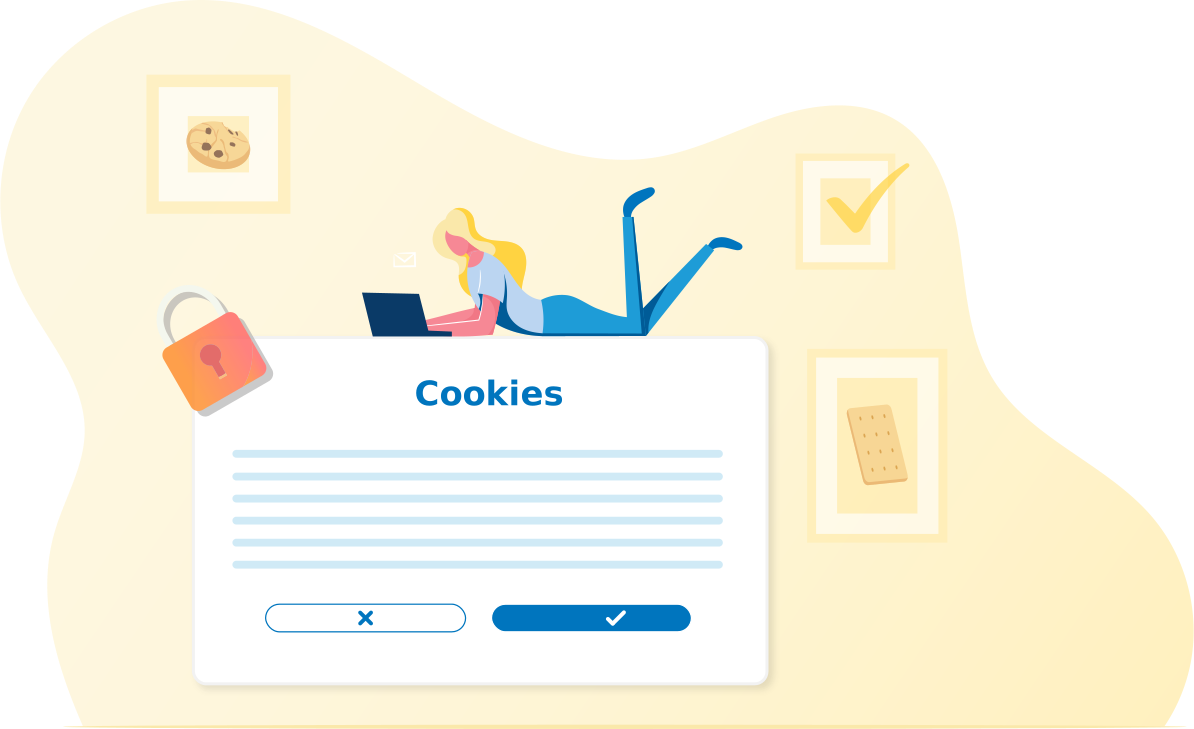
“We use cookies to improve your experience. By clicking ‘Accept,’ you agree to our terms.”
Sound familiar?
Every day, millions of internet users click ‘Accept’ without a second thought.
But what exactly are we agreeing to?
In the world of online privacy and compliance, consent isn’t just about clicking a button. It’s about understanding and controlling how personal data is collected, used, and shared.
Privacy laws – like GDPR in Europe and CCPA in California – have strict rules about how businesses get consent, ensuring it’s freely given, informed, specific, and unambiguous. However, many users remain unaware of what valid consent looks like, and businesses often struggle to implement it correctly.
And that’s risky.
In this guide, we’ll explore:
- What consent means in online privacy
- The legal definitions of consent under key regulations
- The essential rules for valid consent
- Real-world examples of how consent is applied online
What is the full meaning of consent in online privacy?
At its core, consent means giving permission for something to happen.
In the context of online privacy, it refers to a user’s agreement to allow a website or company to collect, process, or share their personal data.
However, not all consent is created equal. Regulations like the General Data Protection Regulation (GDPR) and the California Consumer Privacy Act (CCPA) set strict guidelines on what makes consent valid in a digital setting.
On the whole, consent must be:
- Freely given – Users should have a real choice without pressure or misleading tactics.
- Informed – Individuals must understand what data is being collected and why and how it will be used before agreeing.
- Specific – Consent must be granted for a particular purpose, not as a broad, blanket approval.
- Unambiguous – The user must take a clear, affirmative action (e.g. ticking a box or clicking ‘Accept’).
To make it a touch more complicated, there are two types of consent: Explicit vs. Implied Consent.
Let’s break it down:
- Explicit Consent: The user actively agrees to data collection (e.g. selecting “Yes, I agree” before submitting personal details).
- Implied Consent: The user’s actions suggest agreement without an explicit confirmation (e.g. continuing to use a website that states cookies are used).
What does it mean to have someone’s consent online?
In an online environment, having someone’s consent means they have knowingly and willingly agreed to the collection or use of their personal data.
True consent must be clear, informed, and given without pressure.
For consent to be legally and ethically valid under regulations like GDPR and CCPA, it must meet the following conditions:
Clear and active agreement
A user must take affirmative action to give consent, such as clicking “Accept” on a cookie banner or checking a box to subscribe to emails.
There should be no pre-checked boxes in sight. Basically, websites can’t assume consent by default or use pre-checked boxes that require users to opt out.
Easily understandable
The request for consent must be simple, transparent, and jargon-free, explaining what data is collected and how it will be used.
There should be no hidden terms. Consent can’t be buried in lengthy privacy policies with vague explanations.
Genuine choice to opt in or out
Users must be able to say no without facing restrictions. So, a website can’t block access unless consent is necessary for essential services.
Example of valid consent:
- A website displays a clear and detailed cookie banner with options to accept or reject tracking cookies.
- A user opts in to receive marketing emails by actively checking a box before submitting a form.
- A company provides an easy “Withdraw Consent” button in account settings.
Examples of invalid consent:
- A website uses a vague cookie pop-up with only an “Okay” button, offering no real choice.
- A form includes a pre-checked box for marketing emails, assuming consent unless the user opts out.
- A company makes it difficult to unsubscribe from data tracking or newsletters.
Why it matters: Without valid consent, businesses risk violating privacy laws, facing heavy fines, and losing user trust. For users, understanding how consent should work helps protect personal data and online privacy rights.
Consent legal definition and importance
Laws worldwide define and regulate how businesses must obtain and manage user consent to safeguard privacy and data protection.
Different privacy laws define consent slightly differently, but most agree on key principles.
GDPR (General Data Protection Regulation – EU)
The GDPR provides one of the strictest definitions of consent, stating that it must be: “Freely given, specific, informed, and unambiguous, with a clear affirmative action.”
This means:
- No pre-ticked boxes
- No implied consent (e.g. “By using this site, you agree…”)
- Easy options to withdraw consent at any time
CCPA (California Consumer Privacy Act – US)
The CCPA doesn’t require explicit consent for data collection in most cases but does require businesses to:
- Notify users about data collection and provide an opt-out option
- Obtain explicit opt-in consent for selling data of users under 16 years old
ePrivacy Directive (EU – Cookie Laws)
- Requires explicit consent for non-essential cookies, such as tracking and advertising cookies
- Users must be able to refuse cookies easily (no “Take it or leave it” banners)
So, what are the repercussions for non-compliance?
In truth, pretty hefty.
Failure to follow consent laws can result in heavy penalties: GDPR fines up to €20 million or 4% of global revenue for non-compliance. CCPA fines up to $7,500 per violation, with additional penalties for failing to address opt-out requests.
Make sure you:
- Always obtain active, informed consent before processing user data
- Provide clear and specific explanations about data use
- Make opting out as easy as opting in
- Keep records of consent to prove compliance
Getting to grips with these legal definitions will help you avoid penalties while building trust with users.
Because when privacy is respected, customers are more likely to stay engaged.
Final thoughts: why online consent matters
Today, consent is the foundation of online privacy and data protection. Whether it’s accepting cookies, signing up for a newsletter, or managing privacy settings – the way businesses handle consent determines their legal compliance, customer trust, and brand reputation.
Here are the key takeaways:
✔ ️ Consent is not just a checkbox – it must be freely given, informed, specific, and unambiguous (GDPR) or allow users to opt out easily (CCPA).
✔ Users must have real control over their data – This includes the ability to opt in, opt out, and withdraw consent at any time.
✔ Transparency is key – Companies must clearly explain what data is collected, why, and who it is shared with, avoiding misleading tactics.
✔ Bad consent practices can lead to major fines – Non-compliance with GDPR can result in penalties of up to €20 million or 4% of global revenue, while CCPA violations can cost businesses $7,500 every time. Ouch.
But it’s a win-win for businesses and users
When done right, consent benefits both businesses and consumers.
Users gain control over their data, while companies build stronger relationships based on trust and transparency.
As privacy laws continue to evolve, businesses that prioritize ethical consent practices will stay compliant and earn long-term customer loyalty in an increasingly privacy-conscious world.
Next steps: If you’re a business, review your consent practices to ensure compliance. If you’re a user, start paying closer attention to what you’re agreeing to online – because that one click can make all the difference.
FAQs
1. What is the full meaning of consent in online privacy?
Consent in online privacy means that a user actively agrees to the collection, processing, or sharing of their personal data. It must be freely given, informed, specific and unambiguous, with clear affirmative action, such as clicking “Accept” or checking a box.
2. What does it mean to have someone’s consent online?
Having someone’s consent online means they have been clearly informed about how their data will be used and have actively agreed to it. However, consent is only valid if users are not pressured or misled, can easily opt out, and have a real choice in the matter.
3. What is an example of valid online consent?
- A website displays a cookie banner that explains why cookies are used and provides separate options to accept, reject, or customize settings.
- A signup form includes an unchecked box that users must actively check to agree to receive marketing emails.
- An account settings page allows users to view, manage, and withdraw their previously given consent.
4. What is the legal definition of consent under GDPR and CCPA?
- GDPR (EU): Consent must be freely given, specific, informed, and unambiguous, with a clear affirmative action.
- CCPA (California): Businesses must disclose data collection practices and allow users to opt out of having their data sold, but opt-in consent is only required for minors under 16.
5. Can a business assume consent if a user continues using a website?
No. Under GDPR, implied consent is not valid. A website must provide clear options (Accept/Reject) and require active consent for non-essential data collection, such as tracking cookies.
6. Can a business use pre-checked boxes for consent?
No. Pre-checked boxes are illegal under GDPR because they assume consent rather than requiring users to actively opt in.
7. How can users withdraw consent after giving it?
Websites must provide an easy way to withdraw consent, such as:
- A privacy dashboard where users can manage their settings.
- A clear “Unsubscribe” link in emails.
- A simple method to revoke cookie tracking, such as a settings page or consent banner.
8. What happens if a company violates consent laws?
Businesses that fail to comply with GDPR can face fines of up to €20 million or 4% of annual revenue. Under CCPA, companies may be fined $7,500 per violation and face lawsuits for failing to respect user privacy rights.