Category: Checklists
Categories
-
Publishers guide: Hidden reasons your ad revenue is underperforming
Your ad revenue isn’t where it should be. You’ve checked the obvious things: traffic looks fine, ad partners are in place. Yet the numbers still don’t add up. For most publishers, the problem isn’t in the ad stack. It’s hiding in the consent setup. Consent rates determine whether visitors see high-CPM personalized ads or low-paying…
-

Google Consent Mode v2 in 2024 for Google Ads users
At the end of 2023, Google introduced the new Consent Mode v2, which builds on its predecessor and includes new features and deadlines. These affect certain Google Ads users and come into force in March 2024. To assess whether these changes are relevant to your advertising activities and understand the impact, take a look at…
-

Webinar: Elimination of third-party cookies: what do we do now?
On December 5, 2023, the webinar on “Deleting third-party cookies: What do we do now?” took place in collaboration with Refinery89. instead of. The following topics were discussed: Overview One of the main topics discussed during the webinar was the future elimination of third-party cookies following Google’s recent updates. With the imminent phase-out of third-party…
-

How to implement Google Consent Mode v2
According to an official announcement from Google, the deadline for using Google Consent Mode v2 for certain websites and apps will be early 2024, in March. As mentioned on our dedicated Google Consent Mode v2 page, all websites and apps targeting users within the EEA and the UK must enable Google Consent Mode v2. The…
-

Farewell to 3rd Party Cookies: Explaining the Shift in Online Tracking
Google, the last of the major browsers like Firefox and Safari to slowly move away from third-party cookies, has already announced that it will be completely free of third-party cookies by the end of 2024. We will explain below what this means and how exactly this should happen! Cookies play an important role in tracking…
-
Newsletter: Google Consent Mode v2 will be mandatory from March 2024
Google has an announcement for you about an important update to the digital advertising landscape: Google Consent Mode v2 is here . This new update brings important changes that advertisers and publishers need to be aware of. The most important thing to note: The use of Google Consent Mode v2 will be mandatory for all…
-
Google consent mode and consentmanager
🚨 Note: This article refers to the Google Consent Mode. A brief update on the new function can be found below. Find out more about the new Google Consent Mode v2 requirements here. Update November 28, 2023 – Google Consent Mode v2 Google has introduced Google Consent Mode v2 , a transformative update that changes the…
-
consentmanager Report Spotlight: Traffic Flow
Imagine a scenario where your cookie banner is not only legally compliant, but also leads to higher revenues. In this article you will learn how consentmanager’s Traffic Flow Report can help you realise this scenario. We’ll show you how to find the report directly in your dashboard and together we’ll look at how you can use your…
-
The EU Digital Markets Act Explained
The EU’s Digital Markets Act (DMA) is designed to maintain a healthy level of competition between digital companies by applying certain rules and sanctions, if not followed, to the so-called “gatekeepers“, the largest digital platformsthat currently dominate the online space. At the same time, it aims to encourage innovation in the online marketplace and protect the rights and interests of businesses and consumers…
-
Advanced consent management: These are the features you should know about
The simplest consent mechanisms may be sufficient for small businesses or freelancers. This varies depending on the size of your business or the regulations you need to comply with. Your tool should be able to create a cookie banner and perform basic functions such as: B. the automatic blocking of cookies and the obtaining of…
-
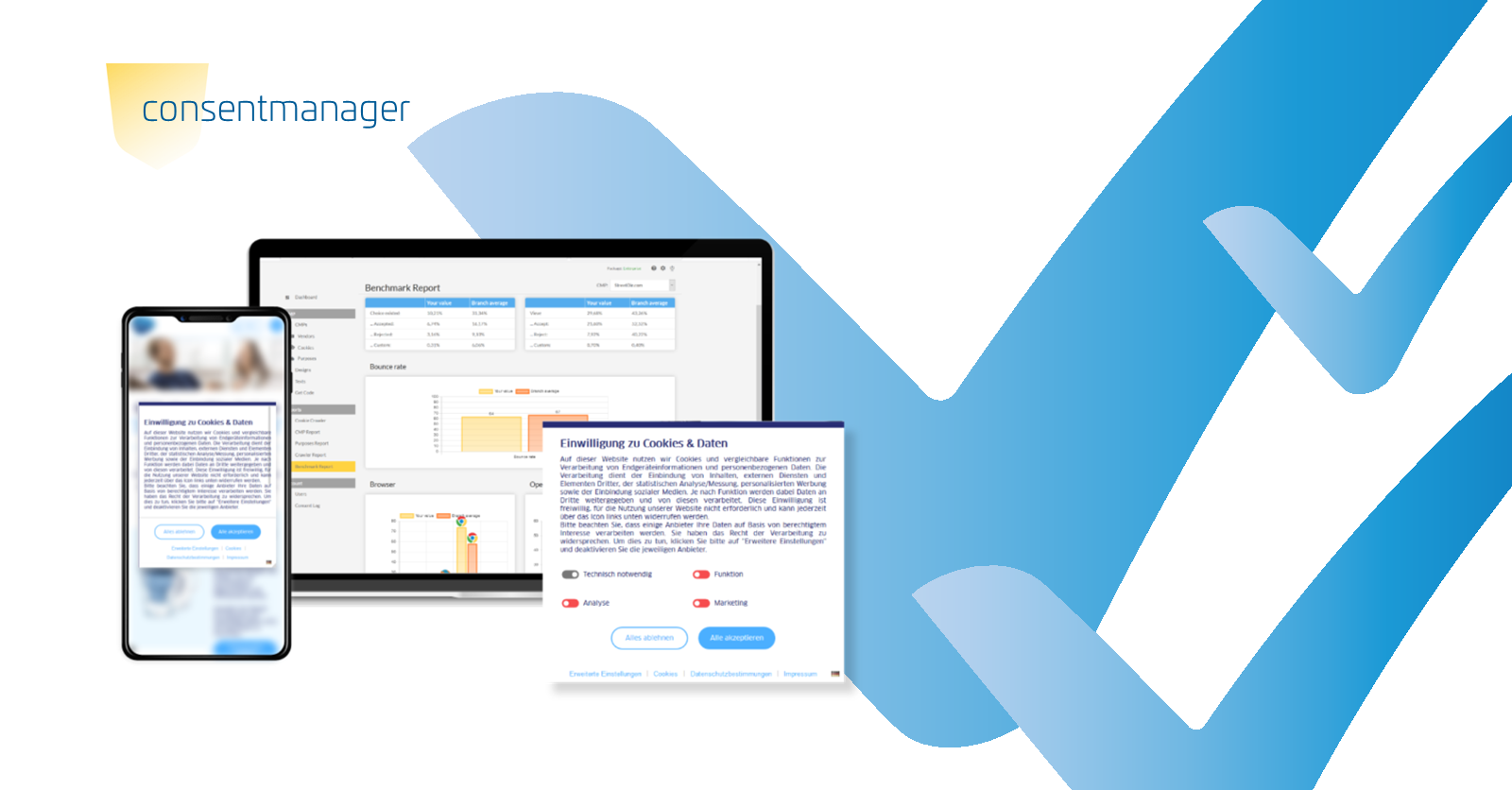
4 questions for choosing the ideal cookie consent tool
Consent to the use of cookies is a fundamental aspect of online privacy compliance, and choosing the right tool for your business is crucial. The legal framework is constantly evolving. Data protection laws such as the General Data Protection Regulation (GDPR) in Europe and the California Consumer Privacy Act (CCPA) in the USA are becoming…